Why Secure Document Management Is an Institutional Requirement
Organizations manage documents containing academic information, financial information, procurement records, human resource records, official correspondence, contracts, reports and other sensitive information.
As organizations become more digital, storing these documents securely becomes increasingly important.
However, secure document management is not simply about putting files into a password-protected folder.
A professional document management environment should consider access control, workflow permissions, document history, secure sharing, verification, user accountability and appropriate retention practices.
What Is Secure Document Management?
Secure document management is the structured management of electronic documents through controlled access, defined workflows and appropriate security measures.
The system should answer important questions:
- Who uploaded the document?
- Who can view it?
- Who can approve it?
- Who can stamp it?
- Who can sign it?
- Who received it?
- What actions have been performed?
- Can the document be externally verified?
Role-Based Access Control
One of the fundamental security mechanisms is role-based access.
Different users should receive permissions appropriate to their responsibilities.
An administrator may manage users and configuration, while a document officer may upload and route documents. A manager may approve or sign documents, while an external recipient may only verify a document.
This separation reduces the risk of giving excessive privileges to ordinary users.
Document-Level Workflow Control
Access control should not be limited to the application menu.
Organizations may also need workflow rules determining which user can perform which action on a particular document.
For example, a document assigned to a finance officer should not automatically become available for stamping by every employee.
Secure Document Upload
Document upload is the beginning of the digital document lifecycle.
Organizations should validate file types, control upload permissions, apply appropriate storage practices and protect uploaded files from unauthorized access.
Digital Stamping and Security
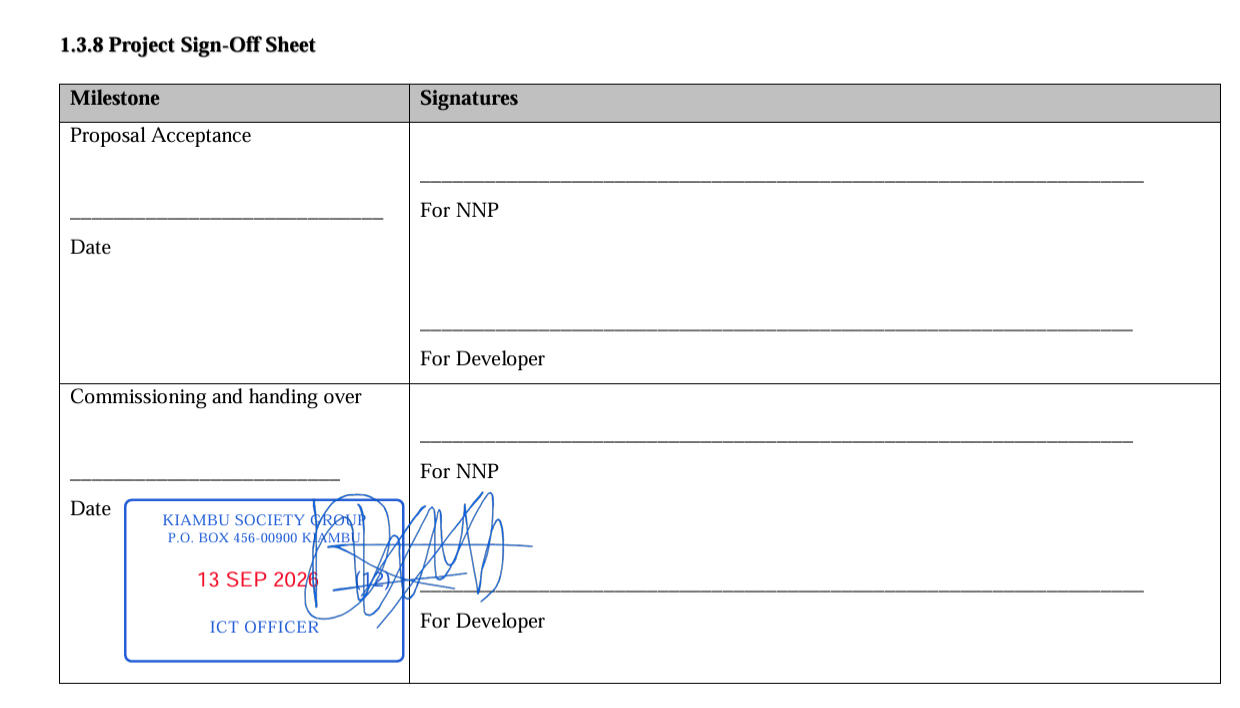
Institutional digital stamps represent privileged organizational actions.
Therefore, access to digital stamping should be controlled carefully.
A professional system should distinguish between a user who can view a document and a user who is authorized to apply an institutional stamp.
Electronic Signature Security
Electronic signing should also be treated as a privileged operation.
Organizations should define which users are authorized to sign particular documents and maintain appropriate records of signing activity.
Authentication, authorization and secure session management are important parts of this process.
Document Audit Trails
Security and accountability are closely connected.
An organization should be able to investigate important document actions.
An audit trail can provide information about activities such as document upload, assignment, review, approval, stamping, signing, forwarding and completion.
QR Verification and Document Authenticity
Online verification can provide external recipients with a mechanism for checking official documents.
A QR code can connect a document to a verification page where the institution communicates an appropriate verification result.
This can be particularly useful for certificates, letters and official documents presented outside the institution.
Protecting Sensitive Information During Verification
Verification does not require an institution to expose every piece of information contained in a document.
A verification page should expose only the information appropriate for external verification.
This principle helps balance authenticity and privacy.
Secure Document Sharing
Organizations often need to share documents with external recipients.
Secure sharing should consider who receives the document, what access they receive and whether access should remain available indefinitely.
The appropriate mechanism depends on the sensitivity and purpose of the document.
Secure Document Management for Universities
Universities manage student records, academic documents, staff records, procurement files, finance documents and institutional reports.
Different departments need different access permissions.
A centralized platform can provide a structured environment where access and workflow responsibilities are defined according to institutional roles.
Secure Document Management for TVET Institutions
TVET institutions process certificates, academic documents, student records, administrative documentation, procurement records and management reports.
Controlled document workflows can help reduce uncontrolled sharing and physical document movement while providing greater operational visibility.
Secure Document Management for Government
Government organizations frequently process documents with formal approval structures and records requirements.
Digital document platforms can support these workflows when configured according to the organization's governance policies, records requirements and applicable regulations.
Secure Document Management for Companies
Businesses can use secure document workflows for contracts, procurement, finance, HR, internal approvals and management documents.
Role-based access can help ensure that employees receive access appropriate to their responsibilities.
Why Centralization Matters
When documents are distributed across personal computers, email accounts, USB drives and unrelated cloud folders, organizations can lose visibility into important records.
A centralized document environment can provide a clearer operational foundation.
Centralization does not remove the need for backups or security controls. Instead, it provides a structured place from which those controls can be implemented.
Document Verification and Business Trust
External recipients need confidence that official documents are genuine.
A verification platform can give organizations a controlled mechanism for communicating document status.
This can help employers, customers, partners, regulators and other recipients verify documents without relying entirely on manual correspondence.
Notifications and Security
Notifications can also contribute to operational security.
Users can be informed when documents are assigned to them or when action is required.
Timely notifications can reduce the risk of important documents remaining unattended in physical offices or personal inboxes.
Security Should Be Designed Into the Architecture
Security should not be treated as a final feature added immediately before launch.
Authentication, authorization, secure storage, controlled workflows, audit records and verification should form part of the system design from the beginning.
Institutional Document Security Checklist
- Use authenticated user accounts.
- Apply role-based permissions.
- Restrict privileged document actions.
- Validate uploaded files.
- Protect document storage.
- Maintain workflow history.
- Control external document sharing.
- Minimize information exposed on verification pages.
- Maintain appropriate backups.
- Review user permissions regularly.
- Define document retention practices.
SyntaxDocVerify Secure Document Workflow
SyntaxDocVerify is designed to combine secure document management with institutional document verification.
The platform brings together document workflows, digital stamps, electronic signatures, QR verification, routing, notifications and document history.
Organizations can explore the institutional solution, review the certificate verification workflow, or request a demonstration.
Conclusion
Secure document management is an important part of institutional digital transformation.
Organizations need more than online storage. They need controlled access, structured workflows, authorization, digital signing, institutional stamping, verification and accountability.
By bringing these capabilities together, organizations can create a stronger digital environment for managing official documents while reducing dependence on fragmented paper and email-based processes.