Why Digital Records Management Is Becoming Important
Institutions create and receive records every day. These records can include academic documents, procurement files, finance records, HR documentation, official correspondence, reports and management approvals.
When records remain primarily on paper, organizations may face challenges with retrieval, physical storage, routing, access control and workflow visibility.
Digital Records Management Is More Than Scanning
Scanning paper files creates digital copies, but a modern records environment should also manage how those records are classified, accessed, routed, approved and retained.
The objective is to create a controlled digital lifecycle rather than simply creating another folder of scanned documents.
Centralized Document Storage
A centralized system provides a consistent location for authorized users to access institutional records. Access should be controlled according to organizational roles and document sensitivity.
Document Classification
Classification helps organizations organize records by type, department, service or workflow. Clear classification makes search and routing more practical as document volumes grow.
Digital Routing
Records often need action before they can be considered complete. Digital routing can send a document to the responsible office or officer and communicate the next required action.
Approval and Authorization
Digital workflows can represent institutional approval structures. Users can review documents and perform authorized actions without depending on physical circulation for every stage.
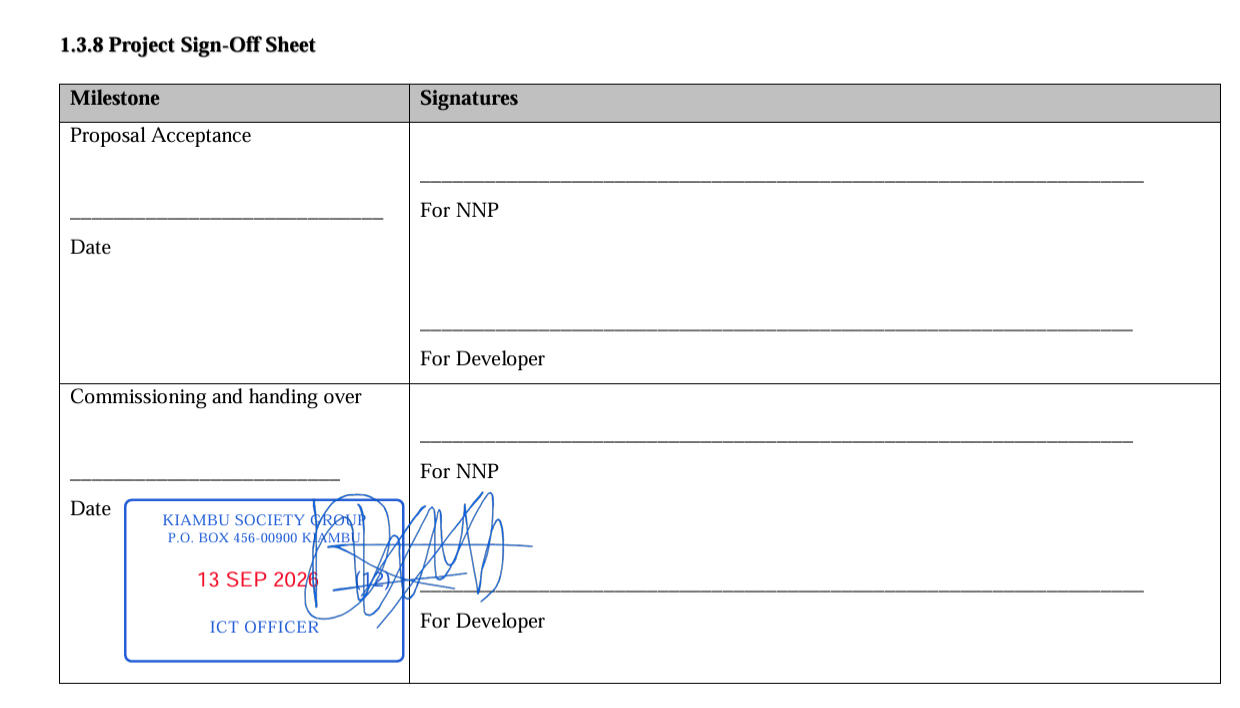
Digital Stamping and Electronic Signing
Institutional records that require official stamps or signatures can be processed through controlled digital workflows. Privileged actions should be limited to authorized users.
Verification of External Documents
Some records eventually become documents that are presented outside the institution. Online verification can provide external recipients with a controlled way to check document references.
Access Control
Digital records should not automatically become available to every user. Role based access can separate viewing, processing, approval, stamping, signing and administration.
Audit History
Audit information helps an organization understand what happened to important records. Useful events can include upload, assignment, review, approval, stamping, signing and completion.
Digital Records for Universities and TVET Institutions
Universities and TVET institutions can apply digital records workflows to academic records, procurement, finance, HR, administration and external document requests.
Digital Records for Government and Companies
Government organizations and companies can use digital records management for internal correspondence, contracts, reports, approvals and other document intensive operations.
Migration From Paper to Digital
- Identify high value and high volume records.
- Map current paper workflows.
- Define classification and access rules.
- Digitize selected records.
- Configure digital workflows.
- Train users.
- Monitor adoption and retrieval performance.
- Expand the program gradually.
SyntaxDocVerify and Digital Records Workflows
SyntaxDocVerify brings document management, routing, digital stamping, electronic signatures and verification together in a structured institutional workflow.
Learn more on the institutional solution page or request a demonstration.
Conclusion
Digital records management should focus on the complete lifecycle of institutional documents. Storage, search, routing, authorization, security and verification all contribute to a useful digital records environment.