Institutional Document Verification Is Becoming a Digital Workflow
Official documents are central to the daily operations of universities, TVET institutions, colleges, schools, government organizations, NGOs, hospitals, financial institutions and private companies. Documents may require review, approval, stamping, signing, verification, routing and eventual archival before they can be considered complete.
For many organizations, these processes are still heavily dependent on printing, physical signatures, rubber stamps, scanning, email attachments and manual movement between offices. While these methods may work for a small volume of documents, they become increasingly difficult to manage when an organization handles hundreds or thousands of official documents every month.
Institutional document verification software provides a digital alternative by bringing document upload, verification, stamping, electronic signatures, routing, notifications and document history into a centralized platform.
SyntaxDocVerify is designed around this operational requirement. Instead of treating a digital stamp as simply an image placed on a PDF, the platform can be used as part of a structured institutional document workflow where authorized users perform controlled actions and the resulting document can be verified electronically.
What Is Institutional Document Verification Software?
Institutional document verification software is a digital platform that allows an organization to authenticate, process, approve, stamp, sign, route and verify official documents through controlled workflows.
A modern platform can connect the document itself with the users, offices, actions and verification mechanisms associated with the document.
This means that a document can move through a process such as:
- Document upload.
- Document review.
- Assignment to an authorized officer.
- Institutional digital stamping.
- Electronic signing.
- Routing to another responsible officer.
- QR or online verification.
- Completion and secure access.
The exact workflow depends on the organization and its internal policies, but the underlying objective remains the same: reduce unnecessary physical document handling while improving traceability.
Why Manual Document Verification Creates Operational Problems
Paper-based verification introduces several points where delays and errors can occur.
- Documents must physically move between offices.
- Authorized officers may need to be physically available before processing can continue.
- Staff spend time printing and scanning documents.
- Large documents can consume significant paper and printing resources.
- Physical files can be misplaced.
- It can be difficult to determine who currently has a document.
- Repeated stamping can require repeated physical movement.
- Scanned copies may become disconnected from the original workflow.
- Audit information may be maintained manually.
- Management may have limited visibility into pending document actions.
These challenges become more significant when documents must pass through several departments or authorized officers.
How a Digital Document Verification Workflow Works
A centralized document verification platform can provide a structured sequence for official documents.
For example, an organization may receive an official report that requires departmental review, management approval, an institutional stamp and an authorized signature.
The digital workflow could be:
- An authorized user uploads the document.
- The document is assigned to the responsible department.
- The department reviews the document.
- The authorized officer applies the required institutional stamp.
- The authorized manager applies an electronic signature where applicable.
- The system records the relevant workflow action.
- The document is routed to the next required stage.
- The completed document is made available for verification or controlled download.
This creates a connected process rather than a collection of disconnected manual activities.
Digital Institutional Stamping
Institutional stamps are commonly used to communicate official authorization or processing.
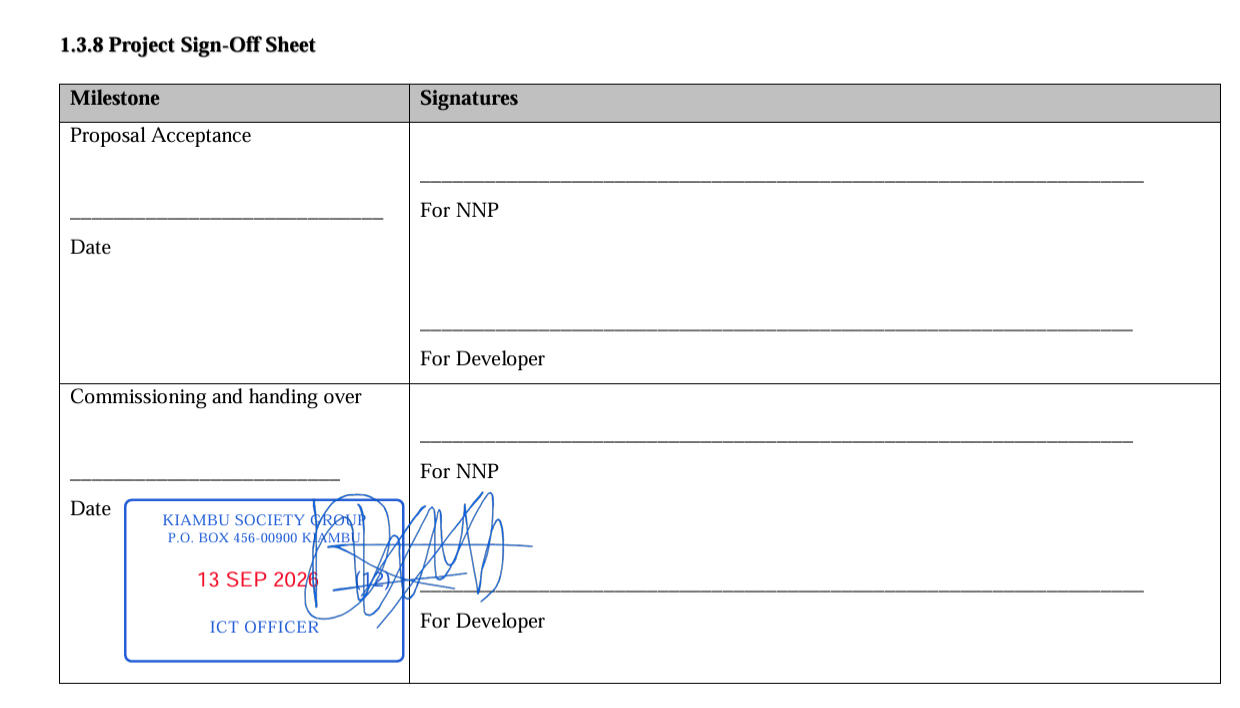
A digital institutional stamp can provide a controlled alternative to manually applying a physical rubber stamp to printed documents.
The important consideration is not merely placing an image of a stamp on a document. A professional implementation should connect the stamping action with authorization, document identity, workflow context and verification mechanisms.
This helps distinguish a controlled institutional workflow from an ordinary image editing operation.
Electronic Signatures for Authorized Officers
Many institutional documents require signatures from managers, directors, registrars, principals, procurement officers, finance officers, heads of departments or other authorized personnel.
An electronic signature workflow can reduce the need to print a document solely to obtain a signature.
Organizations should configure electronic signing according to their internal policies and applicable legal and regulatory requirements. The platform should also maintain appropriate records of the signing action and the authorized account responsible for the action.
QR Code Document Verification
QR verification can provide a practical mechanism for recipients to verify a document through an online verification service.
Instead of relying entirely on the visual appearance of a stamp or signature, a recipient can scan the QR code associated with the document and access a verification page.
A verification page can communicate information such as document status, verification reference and other information that the institution chooses to expose.
This can be especially useful for certificates, letters, official reports, academic documents, procurement documents and other records where recipients need confidence that the document originated from an authorized institutional workflow.
Multiple Stamps and Sequential Approval
Many institutional documents require more than one approval or official action.
A procurement document may require departmental review, finance verification, procurement authorization and senior management approval. An academic document may require processing by a department, registrar or other authorized office.
A digital workflow can represent these stages sequentially.
Officer A → Review → Stamp → Officer B → Verify → Sign → Officer C → Final approval
Each stage can be connected to the same document record so that the organization maintains a clearer history of the process.
Document Routing Between Departments
Document routing is one of the most important components of an institutional document management workflow.
A document should not simply exist inside a storage folder. The organization should know what stage the document is currently in and which authorized person or office is responsible for the next action.
Digital routing can therefore help departments reduce physical document movement while maintaining workflow visibility.
Document History and Auditability
Institutional documents often require accountability long after the original transaction has been completed.
A modern platform can maintain records associated with important actions such as uploading, reviewing, assigning, stamping, signing, forwarding and completing a document.
This creates a stronger operational history than relying entirely on paper files or email conversations.
Secure Access and Role-Based Permissions
Not every employee should be able to stamp or sign every institutional document.
Role-based access can restrict functions according to organizational responsibilities.
- Administrators can manage platform configuration.
- Document officers can upload and route documents.
- Authorized managers can approve or sign documents.
- Verification users can verify documents.
- Other users can receive controlled access according to their assigned permissions.
This creates separation between ordinary document access and privileged institutional actions.
Paperless Workflows for Procurement and Administration
Procurement departments frequently process lengthy documents, quotations, tender documents, evaluation records, purchase documentation and approvals.
Printing large documents simply to obtain stamps or signatures can create additional administrative work.
A digital document workflow can allow authorized officers to process documents electronically while maintaining a structured history of the actions performed.
Use Cases for Institutional Document Verification
- Academic certificate verification.
- Student letter verification.
- Institutional report verification.
- Procurement document processing.
- Official correspondence.
- Human resource documents.
- Finance and accounting documents.
- Management approvals.
- Internal administrative workflows.
- External document verification.
Who Can Use Institutional Document Verification Software?
The technology can support organizations such as universities, TVET colleges, schools, government institutions, county organizations, NGOs, healthcare organizations, professional bodies, private companies and other institutions that issue or process official documents.
Why QR Verification Is Important for Digital Documents
Digital documents can be copied easily. A PDF containing a visual stamp or signature can potentially be duplicated without authorization.
A verification mechanism provides an additional way for a recipient to check the document against an institutional verification service.
The objective is to create a verification experience that is connected to the organization rather than relying only on the appearance of a document.
SyntaxDocVerify for Institutional Digital Transformation
SyntaxDocVerify is an institutional document verification and management SaaS platform developed by Syntax Software Labs.
The platform brings together digital document stamping, electronic signatures, QR verification, document routing, notifications, document management and workflow history.
The objective is to help organizations move from fragmented paper processes toward structured digital document operations.
Organizations can explore the platform through the document verification solution page, review digital document stamping, or request a platform demonstration.
Conclusion
Institutional document verification is no longer limited to physical stamps and signatures.
A modern digital workflow can connect document processing, authorization, electronic signatures, institutional stamps, QR verification, routing and audit information within one controlled environment.
For organizations processing large numbers of official documents, this approach can reduce unnecessary printing and physical movement while improving visibility and verification.