Why Organizations With Many Offices Need More Than a Shared Folder
Large organizations often operate through multiple departments, campuses, branches, regional offices and administrative units.
As the number of offices increases, document management becomes increasingly complex.
A document may originate in one office, require approval from another department, need an institutional stamp from a designated officer and finally be returned to an external requester.
When these processes rely on paper files, email attachments and disconnected storage locations, management can lose visibility into the document lifecycle.
An enterprise electronic document management system, commonly called an EDMS, provides a structured digital environment for managing these processes.
What Is Enterprise EDMS Software?
Enterprise EDMS software is a digital platform used by organizations to manage documents, users, workflows, approvals, access permissions, document history and related operational processes.
A modern EDMS should not simply store files.
It should help organizations understand:
- Where a document originated.
- Who currently has responsibility.
- Which office should process it.
- Which actions are required.
- Who approved or processed it.
- Whether it has been stamped or signed.
- Whether an external requester is waiting.
- Whether the document has been completed.
Managing Multiple Institutional Offices
Organizations with many offices need a clear relationship between users, departments and document workflows.
A centralized EDMS can represent organizational units such as departments, campuses, branches and offices while maintaining controlled access to documents.
This can reduce the confusion created when every department maintains separate spreadsheets and folders.
Centralized Document Routing
Centralized routing allows documents to move electronically between responsible offices.
For example:
External Requester → Registry → Department → Manager → Authorized Signatory → Registry → External Requester
The workflow can be configured according to the organization's actual operating structure.
Office-Level Responsibility
One of the important requirements in large organizations is determining which office is responsible for a particular document.
A document management system can associate submissions with specific offices and departments.
This makes it easier to route work to the correct operational unit.
External Users in an Enterprise EDMS
An enterprise EDMS does not have to be restricted to employees.
Organizations often provide services to people outside the organization.
Examples include:
- Students.
- Graduates.
- Suppliers.
- Contractors.
- Customers.
- Applicants.
- Former employees.
- Partner organizations.
- Professional bodies.
- Other authorized stakeholders.
A modern platform can provide controlled external accounts without exposing the organization's internal administrative environment.
External Users Can Select an Organization
A multi-organization document platform can allow users to identify the organization they need services from.
The user can then submit a document to that organization without becoming an internal employee.
This creates a digital relationship between the requester and the organization for the specific document service.
External Users Can Select a Specific Office
Where appropriate, the requester can select a designated office or service.
This can help reduce misrouting and unnecessary manual redirection.
The organization remains responsible for configuring which offices and services are available to external users.
Internal and External Workflows in One Platform
The strongest EDMS architecture can connect external submissions with internal processing.
An external user submits the document.
The internal organization receives it.
The appropriate office reviews it.
The authorized officer performs the required action.
The result is returned to the external requester.
This creates one connected workflow rather than separate systems for external requests and internal processing.
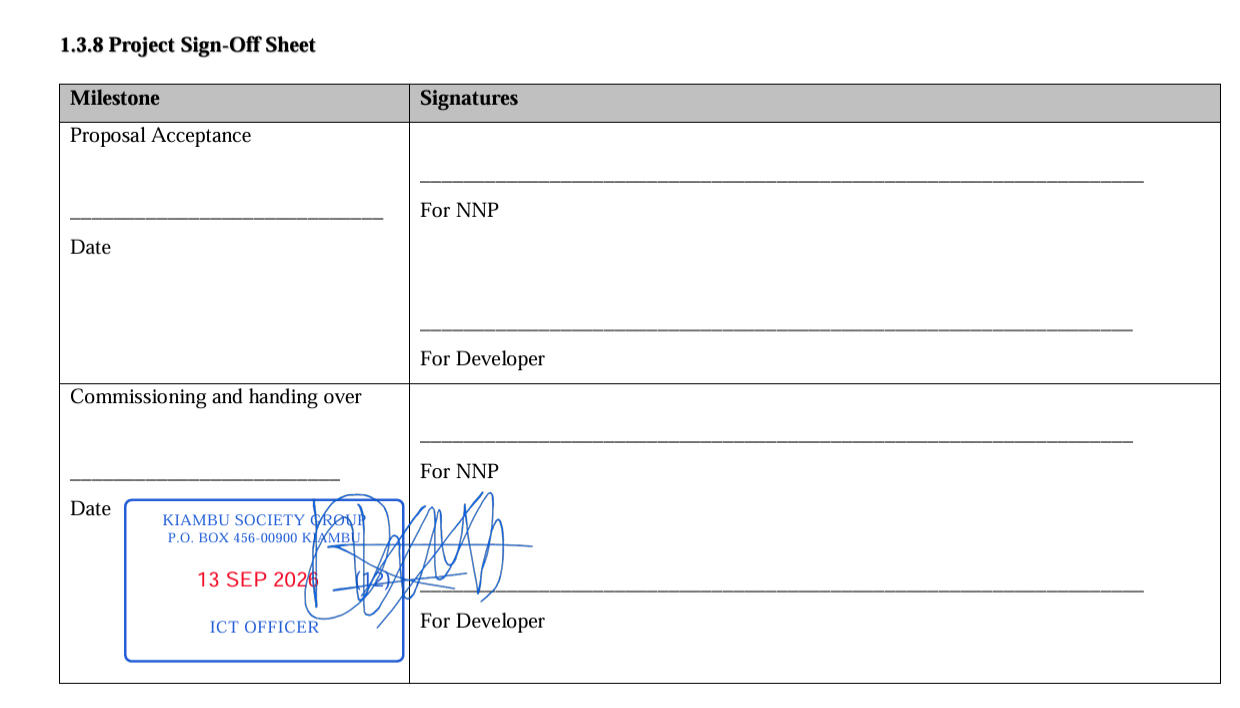
Enterprise Digital Stamping
Large organizations may have multiple authorized stamp holders.
A centralized platform can control which users are allowed to apply specific institutional stamps.
This can help establish stronger governance around digital document processing.
Enterprise Electronic Signatures
Similarly, signing permissions can be assigned according to organizational roles.
A document can be routed to the appropriate authorized signer rather than relying on manual physical delivery.
Document Audit Trails Across Departments
Large organizations require visibility into document movement.
An audit trail can show important actions performed throughout the document lifecycle.
This is particularly useful when a document passes through several offices before completion.
Remote Document Processing for Distributed Organizations
Organizations may have employees working across campuses, branches and regional offices.
A digital workflow can allow authorized staff to process documents from their assigned environment without requiring every document to be physically transported.
Enterprise EDMS and Operational Efficiency
The value of an EDMS is not simply measured by how many documents it stores.
Its value comes from how effectively it improves document-related operations.
Important improvements may include reduced physical movement, faster routing, better visibility, fewer duplicate files and clearer responsibility.
Enterprise EDMS for Universities
Universities often have schools, faculties, departments, campuses, administrative offices and specialized units.
An EDMS can provide a common document workflow environment while preserving organizational separation through permissions and routing.
Enterprise EDMS for Government
Government organizations often have complex structures involving headquarters, regional offices and departments.
A centralized document platform can help create more consistent digital workflows across these organizational units.
Enterprise EDMS for Companies
Companies with branches and departments can use EDMS workflows for contracts, procurement, HR, finance, reports, approvals and external document requests.
SyntaxDocVerify as an Institutional EDMS
SyntaxDocVerify is designed as a modern institutional document management and verification platform.
It combines document management with digital stamping, electronic signatures, QR verification, document routing, notifications and external user workflows.
The platform can be configured for organizations with multiple departments and offices while supporting controlled interaction with external users.
Explore institutional EDMS capabilities or request a demonstration.
Conclusion
Organizations with many offices need more than digital file storage.
They need connected workflows that understand departments, offices, authorized users, external requesters, approvals, stamping, signing and verification.
An enterprise EDMS can provide this foundation while allowing organizations to deliver selected document services remotely.