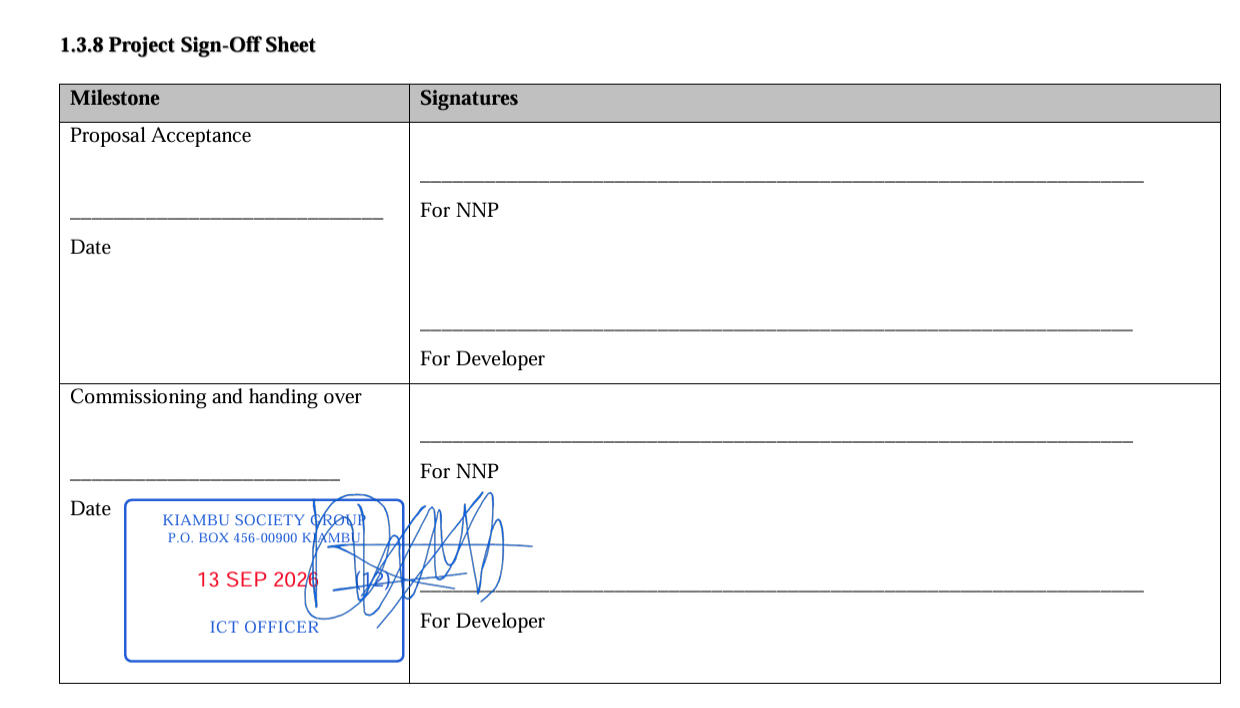
What Is Digital Document Stamping?
Digital document stamping is the process of applying an authorized institutional stamp to an electronic document through a controlled digital workflow.
Traditional stamping normally requires an employee to print a document, physically take it to an authorized office, wait for the responsible officer to apply a rubber stamp and then scan or distribute the completed document.
A digital stamping workflow can move much of this process into a secure online environment.
Instead of printing a document merely to apply a stamp, an authorized officer can access the document through a digital platform, review it and apply the configured institutional digital stamp according to the organization's permissions and workflow requirements.
Why Institutions Are Moving Toward Digital Stamping
Institutions process documents continuously. Reports, letters, procurement documents, academic records, certificates, internal approvals, financial documents and administrative correspondence may all require official processing.
When every document depends on a physical stamp, administrative teams can spend considerable time moving documents between offices.
Digital stamping can help reduce:
- Paper consumption.
- Printing requirements.
- Scanning workloads.
- Physical document movement.
- Waiting time for routine document processing.
- Manual duplication of records.
Digital Stamp Versus a Simple Stamp Image
A professional institutional digital stamping system should not be treated as a simple image insertion tool.
A picture of a rubber stamp can be copied and inserted into another document using ordinary software.
A controlled digital stamping platform should instead associate the stamping action with an authorized user, document workflow and verification mechanism.
This distinction is important for institutions that require stronger accountability around official documents.
How Institutional Digital Stamping Can Work
- An authorized user uploads the document.
- The document is routed to an authorized officer.
- The officer reviews the document.
- The officer initiates the stamping action.
- The platform applies the institutional digital stamp.
- The action is recorded within the document workflow.
- The document can be routed to another stage where required.
- The final document can be verified through the configured verification mechanism.
Digital Stamping for Large PDF Documents
Large documents demonstrate the operational value of digital stamping particularly clearly.
Consider a 200-page procurement document that requires an official stamp. Printing the entire document, stamping it manually, scanning it again and storing the scanned version creates additional work.
A digital workflow can allow the electronic document to remain electronic while the required institutional action is completed through the platform.
This can be useful for tender documents, reports, policies, technical submissions, financial documents and institutional records.
Digital Stamping for Universities and TVET Institutions
Universities, colleges and TVET institutions process large volumes of official documentation.
Examples include student letters, certificates, transcripts, departmental documents, procurement documents, examination documentation, staff records and administrative correspondence.
A centralized stamping workflow can help institutions establish more consistent processes for documents requiring official authentication.
Digital Stamping for Government and Public Organizations
Government organizations and public institutions frequently manage documents that pass through multiple departments and approval levels.
Digital document stamping can support these workflows by reducing unnecessary physical movement and providing clearer visibility into document processing.
Implementation should always follow the organization's internal policies, authorization structures and applicable legal requirements.
Digital Stamping and QR Verification
One of the strongest combinations is digital stamping together with QR-based verification.
The digital stamp communicates institutional processing, while the QR verification mechanism can give a recipient a way to check the document against an online verification service.
This can be useful for documents that need to be presented outside the organization.
Multiple Institutional Stamps
Some documents require several institutional actions.
A document may need to be reviewed by a department, verified by finance, approved by management and finally stamped by an authorized officer.
A digital workflow can connect these activities rather than requiring the document to be physically carried from one office to another.
Document Routing and Digital Stamping
Digital stamping becomes considerably more useful when combined with document routing.
After one officer completes an action, the system can route the document to the next responsible user.
This creates a workflow such as:
Upload → Review → Approval → Digital Stamp → Signature → Verification → Completion
The actual sequence can be configured around the organization's operational requirements.
Audit Trails for Digital Stamping
Institutions need to know who performed important actions on official documents.
A modern digital stamping platform can maintain workflow information associated with actions such as document upload, assignment, stamping, signing, forwarding and completion.
This creates a stronger operational record than relying entirely on physical files.
Role-Based Digital Stamp Authorization
Digital stamping should be restricted to authorized users.
An administrator may manage stamp configuration while designated officers perform actual stamping actions.
This separation helps organizations control privileged document operations.
Benefits of Digital Document Stamping
- Reduced printing.
- Reduced scanning.
- Faster document processing.
- Less physical document movement.
- Centralized document workflows.
- Improved operational visibility.
- Controlled access to institutional stamps.
- Better document traceability.
- Support for remote workflows where organizational policy permits.
- Integration with online document verification.
Digital Stamping for Procurement Workflows
Procurement departments can benefit from digital stamping when documents require multiple internal approvals.
Instead of printing large tender or procurement files simply to obtain an official stamp, authorized users can process the electronic document through a controlled workflow.
This can reduce administrative repetition while preserving the required approval sequence.
Digital Stamping for Certificates and Official Letters
Certificates and official letters are often presented to external recipients.
Digital stamping combined with online verification can provide recipients with a practical mechanism for checking the authenticity of a document.
This is particularly valuable when an institution wants external organizations to verify documents without requiring manual telephone calls or physical visits.
How SyntaxDocVerify Supports Digital Stamping
SyntaxDocVerify is designed to bring institutional document stamping into a broader document verification workflow.
The platform combines digital document stamping with electronic signatures, QR verification, document routing, notifications and document history.
Organizations can learn more through the digital document stamping solution and explore the broader document verification platform.
Conclusion
Digital document stamping is more than replacing a rubber stamp with a digital picture.
A professional implementation connects institutional authorization, document workflows, digital stamping, electronic signatures and verification.
For organizations processing significant volumes of official documents, digital stamping can become an important component of a broader paperless document management strategy.